R&D Tax Credits for AI Startups and Machine Learning Companies
We help AI startups identify, document, and defend R&D tax credits while minimizing disruption to engineering teams and preserving focus on product development.
What Sets Us Apart
- California CPA License
- 8+ Years Specialized Experience
- Flat Fee Pricing Model
- Federal & State Credit Expertise
Do AI Startups Qualify for the R&D Tax Credit?
In many cases Yes , Artificial intelligence companies are often among the strongest candidates for federal R&D tax credits because AI development naturally involves:
- Technical uncertainty
- Iterative experimentation
- Performance optimization
- Algorithm design
- Model training
- Infrastructure challenges
- Continuous improvement
Most AI companies are not simply implementing technology.
They are creating new methods, improving existing systems, and solving technical problems that have no obvious answer at the outset.
Those activities frequently align with the requirements of Internal Revenue Code Section 41
Why AI Development Often Qualifies ?
The IRS generally focuses on four questions:
- Was there technical uncertainty?
- Was experimentation required?
- Was the work technological in nature?
- Was the goal to improve functionality, performance, reliability, or quality?
AI development often satisfies all four criteria.
Common Technical Challenges in AI Development
- Improving model accuracy
- Reducing hallucinations
- Optimizing inference speed
- Lowering training costs
- Improving recommendation quality
- Scaling infrastructure
These are not routine activities. They involve experimentation, iteration, and engineering judgment.
Common Qualifying Activities
Model Development
Building new product functionality often involves experimentation and uncertainty.
Examples: (Large language model fine-tuning, Classification systems, Recommendation engines, Computer vision models, Forecasting systems , NLP applications)
Training Pipeline Development
Examples: (Feature engineering, Data preprocessing, Vectorization pipelines, Embedding strategies, Dataset optimization )
Infrastructure Engineering
Examples: (GPU optimization, Distributed training, Model serving infrastructure, Inference optimization, Caching strategies)
Retrieval-Augmented Generation Systems
Examples: (Retrieval pipelines, Chunking methodologies, Ranking algorithms, Context optimization, Hybrid search implementations)
AI Product Development
Examples: (AI copilots, Workflow automation, Agent architectures, Multi-model orchestration, Autonomous systems)
Activities That Usually Do Not Qualify
Not all AI-related work qualifies.
Examples that often do not qualify include:
- Basic API implementation
- Standard chatbot deployment
- Prompt writing without technical experimentation
- Routine maintenance
- Data labeling without technical development
- Model usage without modification or improvement
The key distinction is whether genuine technical uncertainty and experimentation existed.
Typical Credit Ranges for AI Companies
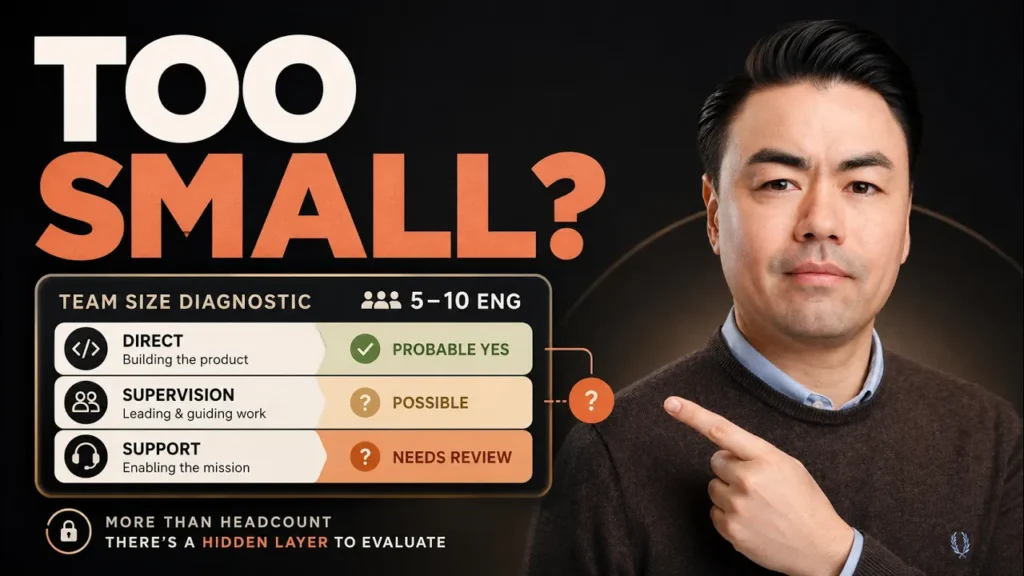
The size of the credit depends largely on engineering payroll and development intensity.
Technical Team Size | Typical Credit Range |
5–10 Engineers | $50,000 – $100,000 |
10–25 Engineers | $100,000 – $250,000 |
25–50 Engineers | $250,000 – $500,000+ |
Actual results vary depending on qualified activities and eligible expenses.
Section 174 and AI Companies
Many AI startups are eligible for credits while simultaneously facing increased tax liability due to Section 174.
Most growing AI Startup are affected by both.
Common Mistakes AI startups
Companies Make
Drag to browse
01 / 05
Assuming AI Is Too New To Qualify
The credit focuses on technical uncertainty rather than industry labels.
02 / 05
Waiting Until Tax Season
Capturing documentation throughout the year simplifies the process significantly.
03 / 05
Ignoring State Credits
California and several other states provide additional opportunities.
04 / 05
Focusing Only on Federal Credits
State credits often create additional opportunities.
05 / 05
Treating Section 174 and R&D Credits As The Same Things
They are closely related but fundamentally different tax concepts..
Why AI Startups Choose Us ?
We Understand Technical Teams
We understand:
- Model training
- Inference optimization
- MLOps workflows
- Distributed systems
- Product development cycles
- Infrastructure scaling
CPA-Led Expertise
Led by a California and Nevada CPA with advanced tax specialization and extensive R&D experience.
Flat Fee Pricing
Most providers charge a percentage of the credit generated.
We use a transparent flat-fee model that allows clients to retain the full upside as credits grow.
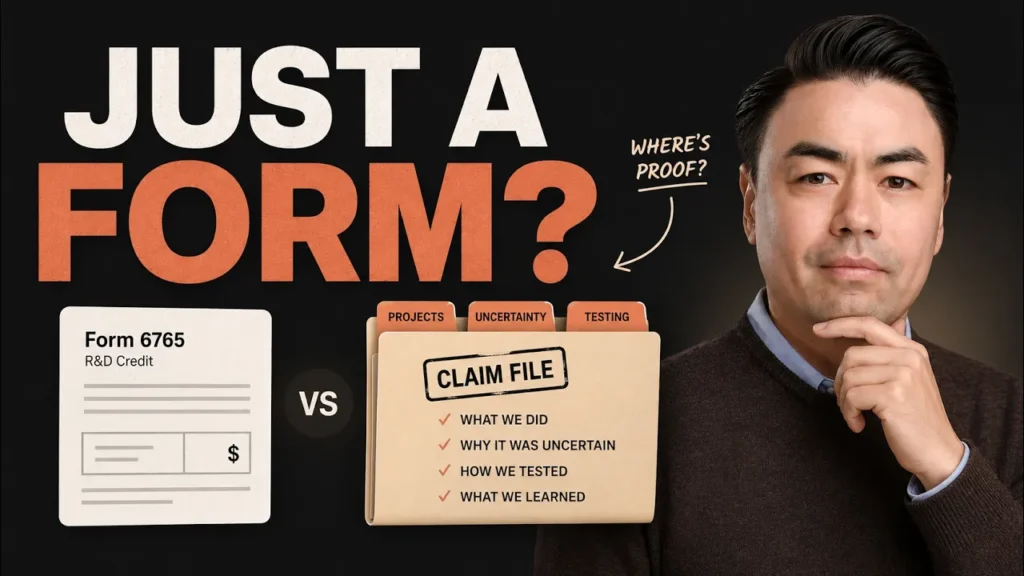
Documentation Built For Defensibility
Our objective is not simply maximizing credits.
Our objective is preparing supportable and defensible claims.
Long-Term Partnership
Quarterly check-ins help clients improve documentation and simplify future filings.
FAQ
Does training an AI model qualify?
Often yes, particularly when experimentation and technical uncertainty are involved.
Does prompt engineering qualify?
Routine prompt usage generally does not.
More advanced experimentation involving model behavior and system architecture may qualify depending on the facts.
Do inference optimization projects qualify?
Frequently yes.
Performance optimization is often a strong indicator of qualifying activity.
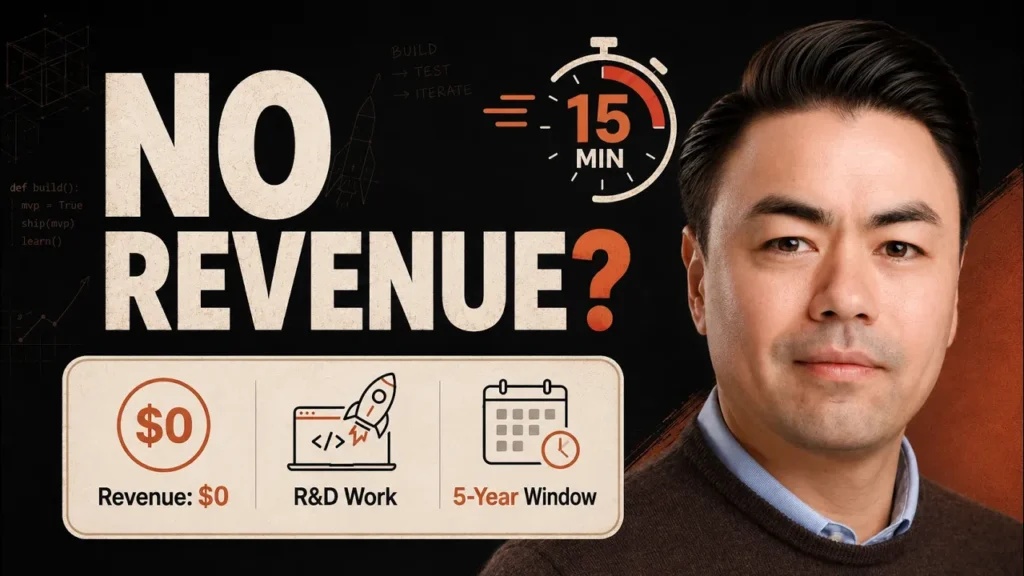
Can startups claim credits before profitability?
Yes.
The payroll tax offset provision often provides value before income taxes become relevant.
Are cloud computing expenses eligible?
Certain development-related costs may qualify depending on the circumstances.
Can contractors qualify?
In many cases, yes.

Solar Technology Company
Had never previously explored the R&D credit. After reviewing their development work the technical problem-solving behind their solar technology the credit was clearly there. The leadership team now has a predictable annual process in place. The credit no longer falls through the cracks.

Space Technology Startup
Previously using an automated provider for two years. When we reviewed their actual development work, we found qualifying activity that had been missed not from carelessness, but because a standardized process couldn't account for the specific engineering their team was doing. Capital from the corrected study was used to extend runway and support additional hires.

Vinit Gupta

Henry Huie

Brendan Conaway
What Our Clients Say
Our Clients